Prototype vs. Launch-Ready Product: What Is the Difference?
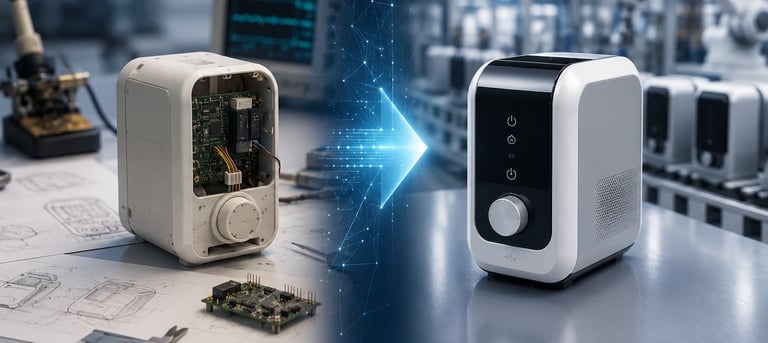
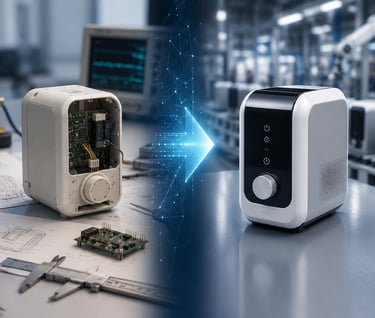
Many businesses have innovative ideas, but turning those ideas into successful products requires a clear understanding of the product development journey. One of the most common misconceptions is assuming that a prototype is the same as a market-ready product. While both are essential stages in development, they serve very different purposes.
Understanding the difference between a prototype and a launch-ready product can help businesses reduce risks, optimize costs, and accelerate time-to-market.
What Is a Prototype?
A prototype is an early version of a product created to test concepts, functionality, and design assumptions. It is primarily used for validation and learning rather than commercial deployment.
The purpose of a prototype is to:
Demonstrate core functionality
Validate design concepts
Gather user feedback
Identify technical challenges
Reduce development risks
Prototypes are often built quickly and may not include final materials, production-quality components, or complete features.
Key Characteristics of a Prototype
Focused on testing and validation
Limited functionality
Not optimized for manufacturing
May lack compliance certifications
Built for learning and iteration
What Is a Launch-Ready Product?
A launch-ready product is a fully developed solution prepared for commercial production and market deployment. It has undergone rigorous testing, validation, compliance checks, and manufacturing optimization.
A launch-ready product is designed to:
Deliver a reliable user experience
Meet quality and safety standards
Support scalable manufacturing
Comply with industry regulations
Generate revenue in the market
Unlike a prototype, a launch-ready product is engineered for real-world performance and long-term reliability.
Key Characteristics of a Launch-Ready Product
Fully functional and validated
Manufacturing-ready design
Regulatory and compliance approvals
Quality-tested and optimized
Ready for customer use and commercialization
Prototype vs. Launch-Ready Product
PrototypeLaunch-Ready ProductTests concepts and functionalityReady for commercial deploymentLimited featuresComplete feature setBuilt for experimentationBuilt for reliabilityNot optimized for productionManufacturing-readyMay not meet regulationsCompliance-certifiedUsed internally or for testingUsed by customers
Why the Gap Matters
Many products fail because businesses underestimate the work required between prototyping and commercialization. A successful transition requires:
Engineering refinement
Product validation
Compliance and certification
Supplier selection
Manufacturing planning
Quality assurance
Documentation and support
Skipping these steps can lead to production delays, quality issues, and increased costs.
The Journey from Prototype to Product
Moving from a prototype to a launch-ready product involves several critical stages:
Design Optimization
Engineering Validation
Testing and Certification
Manufacturing Preparation
Supply Chain Development
Quality Control Implementation
Product Launch Planning
Each stage ensures that the product can perform reliably at scale while meeting customer expectations.
How BNEW Technologies Helps
At BNEW Technologies, we support businesses throughout the entire product development lifecycle. From concept validation and prototyping to testing, compliance, and manufacturing readiness, our engineering teams help transform innovative ideas into world-ready products.
Our end-to-end approach reduces development risks, accelerates market entry, and ensures products are built for long-term success.
Contact
Let's turn your ideas into reality
Email:-
reach@bnew.io